1
Diagnose the current state
We interview leaders and teams, review tools and policies, map workflows, and identify where AI is already being used well or poorly.
AI strategy is not a slide deck about tools. It is a practical operating plan for where AI should be used, how teams should adopt it safely, what capability needs to be built, and how leaders will know whether it is improving real work.
We interview leaders and teams, review tools and policies, map workflows, and identify where AI is already being used well or poorly.
We separate useful AI opportunities from noise by looking at impact, feasibility, risk, data readiness, and adoption complexity.
We turn priorities into a phased plan across pilots, training, governance, workflow redesign, and success metrics.
We help teams practice on real work, create repeatable playbooks, and move from tool access to durable AI fluency.
We assess AI maturity across leadership intent, tool adoption, workflow integration, data and governance readiness, employee confidence, and evidence of business value. The result is a clear maturity level that helps leaders choose the right next step.
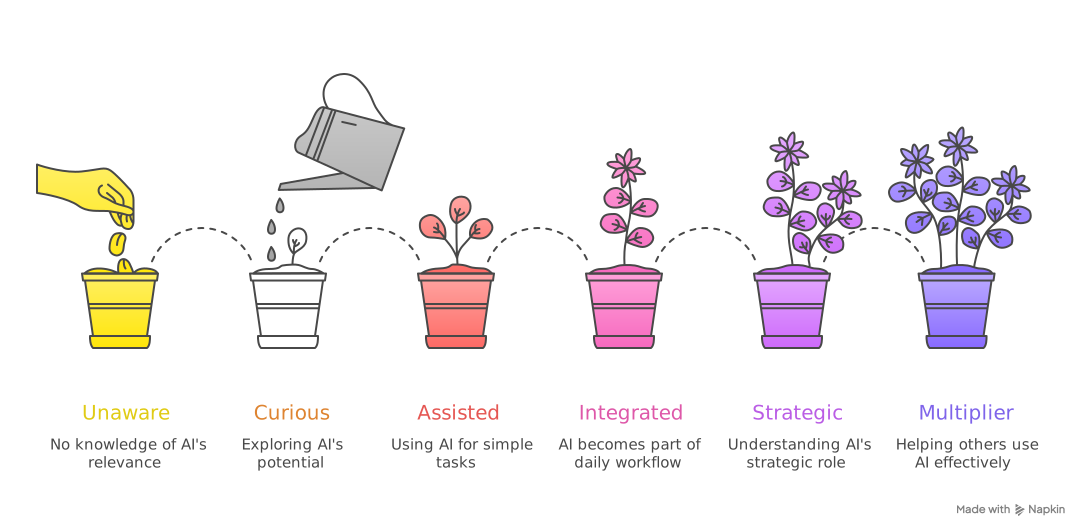
Teams have little shared understanding of AI relevance, risks, or practical business use.
People are experimenting, but use is informal, inconsistent, and disconnected from company priorities.
AI supports simple tasks, but workflows, policies, and quality checks are still immature.
AI becomes part of daily workflow with clearer patterns, review habits, and role-specific use cases.
Leaders connect AI to operating goals, governance, talent plans, and measurable business outcomes.
Advanced users coach others, repeatable playbooks spread, and AI capability compounds across teams.
We help leaders understand current maturity, choose practical AI investments, and build the internal capability to keep improving.